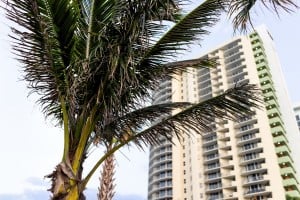
 MS Amlin insurance company sued the policyholders of a Florida hotel, stating that Hurricane Irma did not cause the more than $1 million in damages claimed. Instead, they argued that the majority of the building’s issues already existed before the September 2017 storm, and were mostly the result of shoddy construction work.
The lawsuit
The insurance company, MS Amlin Corporate Member Ltd., sued policyholders SoHo Realty LLC and Yahav Enterprises LLC in federal court in Florida on October 18, claiming the following: that MS Amblin does not have to cover the damage, that its appraisal is correct, and that the property owners’ appraisal is not impartial.
In a letter to the insureds, MS Amlin’s attorney wrote, “Underwriters’ investigation has concluded that the vast majority of the observed damage at the property showed no signs of being caused by Hurricane Irma and in fact predated the storm.”
The property is part of the Alexander Hotel in Miami Beach and includes a two-story ballroom, restaurant space, kitchen, gym, office, and outdoor tiki bar. It’s also in the midst of a $40 million restoration project, according to MS Amlin.
Hurricane Irma hit the Miami area around September 10, 2017, and the insureds filed an insurance claim a little over a week later. Their adjuster, Hernan C. Dominguez Jr., first estimated the damage at approximately $978,000 but later revised that amount to slightly over $1.1 million.
The appraisals
Dominguez reported that all of the damage to the property was a result of wind and rain from Irma. MS Amlin’s appraiser, however, reported that only about $58,000 of damages were a result of the hurricane. Further, according to the policy, coverage is limited to $2.8 million for improvements, $1 million for business income and $300,000 for the tiki bar. Each of those numbers comes with a five percent deductible for windstorms.
Using MS Amlin’s number of $58,000, the repair costs don’t exceed the deductibles, so the insurer claims they’re not required to pay out anything to the defendants. The insurer’s appraiser reports that the other damage appears to have been caused by leaks in walls, ceilings, pipes and air conditioning units, as well as mold and mildew, which is not covered by the current policy.
SoHo and Yahav are challenging MS Amlin’s appraisal, but the insurance company wants an impartial appraiser. The property owners’ choice, Dominguez, was hired on the contingency that his fee be linked to the amount of money recovered. “It is clear that Mr. Dominguez’s personal financial interests would be tied to the insureds’ in any appraisal,” MS Amlin claimed.
This is set to be an interesting case and gives some good insight to the world of appraisals and commercial claims. It also reminds us why it is so important to understand your policy contract before you sign it, so that you do not lose out if you ever need to make a claim.
The Gilbert Firm is highly experienced and respected in insurance disputes. Our Tennessee attorneys work to protect you when your insurer fails to pay out a claim or continually delays your payment. Brandon McWherter, Clint Scott, and Jonathan Bobbitt provide skilled, professional representation. Call us today at 888.996.9731, or fill out our contact form. We maintain offices in Nashville, Chattanooga, Memphis, Jackson and Knoxville.
 A class-action lawsuit filed recently in Philadelphia state court claims that Travelers is selling rot insurance to homeowners while concealing the actual terms of the proposed coverage. According to the lawsuit, Travelers Home and Marine Insurance Co. allegedly markets and sells add-on homeowners’ insurance to consumers that is supposed to provide coverage for rot and fungus damage. However, the insurance policy fails to explain that certain causes of rot damage are not included in the coverage.
 Insurance disputes can arise out of even the most minor of issues between policyholders and insurance carriers. These disputes can involve just about anything under the sun, including bad faith claims. So, what does an insurance dispute attorney do for a policyholder in a bad faith claim?
 Insurance companies have a duty to negotiate in good faith. This duty extends to homeowners, auto owners, business owners, and anyone who has a right to expect payment from their insurance company when an accident or catastrophe strikes. When someone demands payment from their carrier, it is known as a first-party claim. When an individual seeks to have the insurance company or someone else pay damages, it is called a third-party claim.
 The whole point of homeowners’ insurance is to protect you in the event of damage to your home. Whether there was a fire, or a flood, or wind damage, etc. – you call your agent, he or she helps you make a claim, and then you get paid out so you can fix your home. Should be easy enough.
 When you purchase an insurance policy – homeowners, auto, commercial, etc. – you do so assuming that your insurance company will act in good faith and honor the claims you make, provided that claim is covered by the policies you have bought. When an insurer deliberately denies a claim for unjust reasons, you may be able to pursue a bad faith action.
 In our piece about