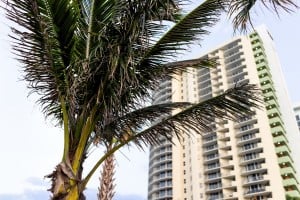
 MS Amlin insurance company sued the policyholders of a Florida hotel, stating that Hurricane Irma did not cause the more than $1 million in damages claimed. Instead, they argued that the majority of the building’s issues already existed before the September 2017 storm, and were mostly the result of shoddy construction work.
The lawsuit
The insurance company, MS Amlin Corporate Member Ltd., sued policyholders SoHo Realty LLC and Yahav Enterprises LLC in federal court in Florida on October 18, claiming the following: that MS Amblin does not have to cover the damage, that its appraisal is correct, and that the property owners’ appraisal is not impartial.
In a letter to the insureds, MS Amlin’s attorney wrote, “Underwriters’ investigation has concluded that the vast majority of the observed damage at the property showed no signs of being caused by Hurricane Irma and in fact predated the storm.”
The property is part of the Alexander Hotel in Miami Beach and includes a two-story ballroom, restaurant space, kitchen, gym, office, and outdoor tiki bar. It’s also in the midst of a $40 million restoration project, according to MS Amlin.
Hurricane Irma hit the Miami area around September 10, 2017, and the insureds filed an insurance claim a little over a week later. Their adjuster, Hernan C. Dominguez Jr., first estimated the damage at approximately $978,000 but later revised that amount to slightly over $1.1 million.
The appraisals
Dominguez reported that all of the damage to the property was a result of wind and rain from Irma. MS Amlin’s appraiser, however, reported that only about $58,000 of damages were a result of the hurricane. Further, according to the policy, coverage is limited to $2.8 million for improvements, $1 million for business income and $300,000 for the tiki bar. Each of those numbers comes with a five percent deductible for windstorms.
Using MS Amlin’s number of $58,000, the repair costs don’t exceed the deductibles, so the insurer claims they’re not required to pay out anything to the defendants. The insurer’s appraiser reports that the other damage appears to have been caused by leaks in walls, ceilings, pipes and air conditioning units, as well as mold and mildew, which is not covered by the current policy.
SoHo and Yahav are challenging MS Amlin’s appraisal, but the insurance company wants an impartial appraiser. The property owners’ choice, Dominguez, was hired on the contingency that his fee be linked to the amount of money recovered. “It is clear that Mr. Dominguez’s personal financial interests would be tied to the insureds’ in any appraisal,” MS Amlin claimed.
This is set to be an interesting case and gives some good insight to the world of appraisals and commercial claims. It also reminds us why it is so important to understand your policy contract before you sign it, so that you do not lose out if you ever need to make a claim.
The Gilbert Firm is highly experienced and respected in insurance disputes. Our Tennessee attorneys work to protect you when your insurer fails to pay out a claim or continually delays your payment. Brandon McWherter, Clint Scott, and Jonathan Bobbitt provide skilled, professional representation. Call us today at 888.996.9731, or fill out our contact form. We maintain offices in Nashville, Chattanooga, Memphis, Jackson and Knoxville.
 Claims and lawsuits against property managers are a common occurrence. As the owner of a property management company, failing to have the proper insurance protection in place can leave you and your business exposed to unnecessary financial risk. As well, your clients are relying on you to carry the proper insurance to protect their assets. Acquiring the appropriate insurance coverage to protect your business, yourself, and the properties you manage is essential when establishing yourself as a property manager.
 Residential and commercial builders are now using drones to perform aerial views of properties, enabling them to use the recorded images and data for more efficient and accurate construction activities. Drone videography and photography services are also used by real estate agents and property developers to market listings and prospect for land development opportunities, respectively.
 Being a homeowner isn’t always easy. There’s so much that goes into owning a home, including having an insurance policy that protects you from various dangers. But, does your insurance policy actually protect you? Many insurance policies have different riders that wind up costing the homeowners more than just their premium when damage is done to their property. For example, has your home been damaged by a flood, a storm, or a broken pipe? Are you under the belief that your policy will cover such damage? Depending on your policy, you may not be covered after all.
 A court decision in Tennessee regarding a homeowners’ insurance policy recently caught our eye. We thought it was a great opportunity to talk about the concept of misrepresentation and fraud.
 A class-action lawsuit filed recently in Philadelphia state court claims that Travelers is selling rot insurance to homeowners while concealing the actual terms of the proposed coverage. According to the lawsuit, Travelers Home and Marine Insurance Co. allegedly markets and sells add-on homeowners’ insurance to consumers that is supposed to provide coverage for rot and fungus damage. However, the insurance policy fails to explain that certain causes of rot damage are not included in the coverage.
 More and more people are working from home these days, whether it’s full-time for a brick-and-mortar company, as telecommuters, or as independent business owners. Because of the increase in work-at-home employees, it’s important to look at how insurance policies protect your home-based business property in the event of damage. 2018 was filled with horrific catastrophes including massive wildfires, floods, hurricanes, tornadoes and crippling blizzards. Would your home-based business survive if a weather event or other catastrophe caused damage to your home?
 When you purchase an insurance policy, you’re ensuing that, in the event of a loss, there is a way for you to put your property back in pre-loss condition. Did you know that most states have a “Bill of Rights” for property owners which sets forth some basic rights to which a policyholder is entitled under their policy? For example, Tennessee has one that applies to homeowners’ claims of $20,000 or more. In Tennessee, all policyholders must be given a written statement of those rights from their insurer.
 In a
In a  U.S. District Judge Sue E. Myerscough, of the Central District of Illinois, granted summary judgment to West Bend Mutual Insurance Co., ruling that the company was not responsible for the nearly $1 million in repairs to a Hampton Inn that sustained water damage. The lawsuit was filed two years ago by the hotel owners, who claimed that “the Wisconsin-based insurer didn’t specify that the policy excluded ‘continuous or repeated seepage’ and ‘leakage of water’ claims in a pair of letters denying coverage for damage,”